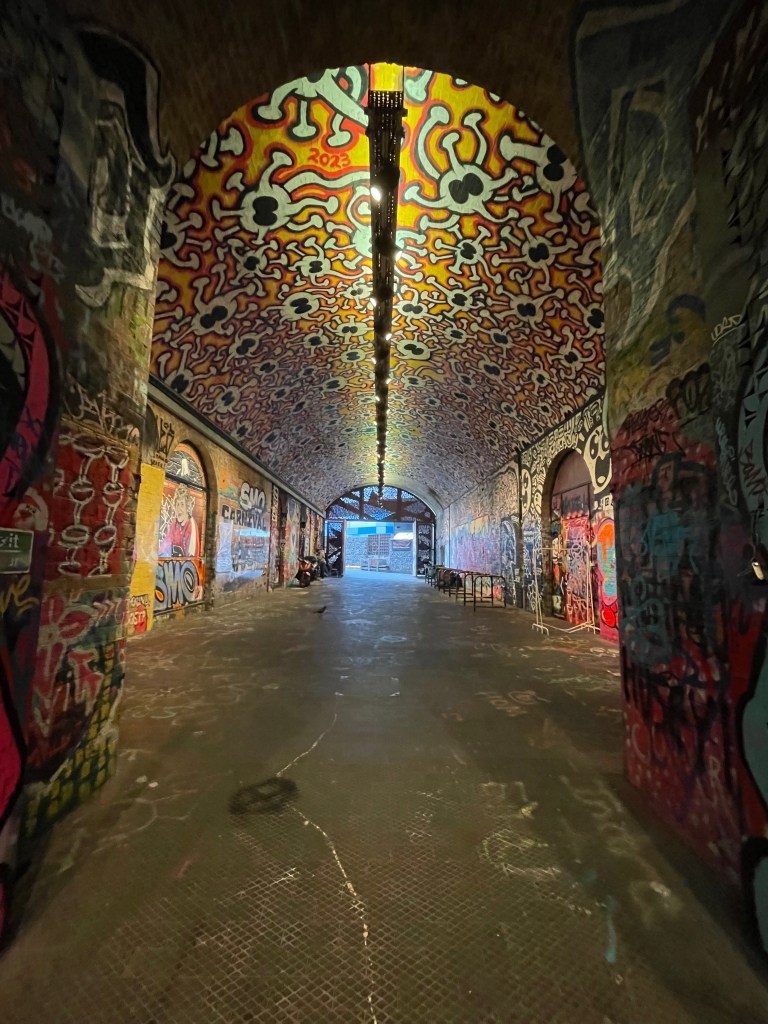
This month has been a little tiring, with its white-light days and freezing weather. In comparison, January felt so cosy. This month felt like a blur of naps, video games, essay writing, and generally feeling exhausted. However, there were some wonderful moments, such as a couple of birthdays, travelling to London to see Patti LuPone, and meeting a friend for the first time in person. We’ve been friends for almost seven years now but we’ve always talked online. Whilst in London, we got to spend a couple of days together, which was absolutely lovely!
As the weather begins to pick up in the last days of February, the dreariness has lifted slightly. I’m hoping March brings the spring feeling we’re all hoping for – longer days, sunshine, and a burst of fresh air.
What I’ve Been Reading
I thoroughly enjoyed the reading challenge for this month; both of them were fantastic books. I can’t pretend I didn’t love Bisclavret in particular – it was definitely a favourite. As for the others, I actually felt very drawn to non-fiction these past few weeks. I thought I’d read a couple of books that I’d been looking forward to. After Nomadland, I did consider reading two memoirs, one by Jennifer Worth and one by Jeanette Winterson. Instead, I thought I’d finish the All Souls Trilogy as I’ve been making my way through the series for a year and a half. Even so, the memoirs still call to me.
The Ravenous Fate by Hayley Dennings (DNF).
This was, perhaps, a record for me in how fast I chose to stop reading this novel. My partner is a big fan of the vampire genre so I bought her this book for Christmas. It wasn’t one that she particularly liked and she asked me to read it to give my opinion. Overall, I read six pages of this book before discontinuing. I usually get at least halfway into a book before making such decisions but this was a difficult read for me, even in those several pages. I felt that the language and sentence structure was simple enough and yet, the wording was clumsy in a way that I couldn’t quite place, as were the techniques used. I could already tell that this book wasn’t for me. This is for a much younger audience and I was generally disinterested in what the book had to offer. Admittedly, this is a shame, since the concept is a brilliant one. I didn’t feel that the execution was there, however.
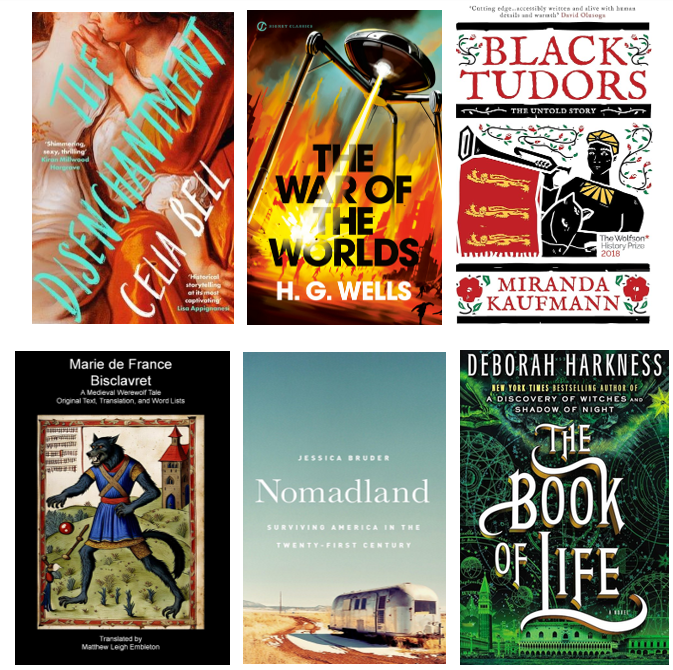
The Disenchantment by Celia Bell.
The blurb promised something fast-paced and deeply exciting. How it unravelled, in contrast, was slowly, with a sense of deepening depression and stifling atmosphere that left the reader feeling as trapped as the characters themselves. This, unfortunately, wasn’t followed through to the end, as I thought this aspect was well-done. Bell’s writing is atmospheric, which is precisely what you hope for in historical fiction. However, there were issues with the romance, the mystery element of the novel, and the pacing. The ending felt hollow and the romance was essentially non-existent. This was especially disappointing as the plot was based off of real-life events that sounded fascinating. Overall, I think the main issue with this book was that the secrets of Paris and Versailles – the black magic and satanic rituals, the horrifying oppressiveness of religion through state law, and the queerness of the two main characters – felt under-developed and unexplored. It was lacking the depth needed to make the book truly come alive.
The War of the Worlds by H.G. Wells.
In this novel, I thought that the allegory of imperialism and evolution was fascinating. This was the highlight of the book for me. The War of the Worlds ended in a way that was unexpected but was, in my mind, well-done. It signifies two commentaries that Wells intended to make – how intelligence and strength don’t always denote survival but also, how war and conquest can force the hand of evolution, wiping out natural habitats and the organisms that live upon them. The anti-imperialist message was strong and the use of invasion fiction to parallel the realities of colonialism made for a terrifying read. What’s more, Wells does a fantastic job of following the emotion of the narrator. I followed the initial curiosity, panic, hope, despair, and even the acceptance of murder in order to survive. I felt the same startled hope and relief at the end. This speaks to the strength of the novel, as I was always emotionally synced with the events that unfolded. It’s easy to see how this is a classic piece of literature.
Black Tudors by Miranda Kaufmann.
I loved this book! Black Tudors showcases black history far older than slavery and the Windrush generation, offering a new perspective on how England viewed race before the Atlantic slave trade even began. The sole downside was that a couple of the stories felt a little impersonal, as Kaufmann could only work with the limited records she had. She was able to weave historical context with testimonies, statements, receipts, and letters, but some were more trackable than others. This is an understandable reality of sourcing historical records, yet there were two stories in particular that felt incomplete compared to the others. Overall, I think Kaufmann did a fantastic job of sourcing a variety of stories, with different ages, genders, professions, and backgrounds. The Evening Standard wrote: “That rare thing: a book about the 16th century that said something new” and I wholeheartedly agree. Black Tudors is both wonderful and fascinating from start to finish; I would highly recommend it to anyone.
Bisclavret by Marie de France.
This story is incredibly short, being a French Lais from the 12th Century. However, it was a fun and interesting read. This is the first text that I’ve read by Marie de France; I believe there are twelve overall. I would certainly like to read the rest if this lais is anything to go by. Fable-like, this supernatural story was engaging and humorous. For something so short, there is a great deal of friendship, treachery, love, silliness, and morality. I was rooting for the wife and her lover to get their comeuppance and it was satisfactorily done. The friendship between the King and Bisclavret, considering the way male friendship is often portrayed, was incredibly loving. As for the nose-less children, they amused me for the rest of the day.
Nomadland by Jessica Bruder.
This book is wonderfully written and engaging. However, I found the subculture that it explores deeply insidious. A lot of the elderly nomads have a mentality that they are free, as well as retired, yet their continual need to engage in labour-intensive, literally bone-breaking, and exploitative work is not some wonderful nomadic dream but a nightmare of late-stage capitalism in the US. I admire the optimism and perseverance that these ‘retirees’ meet these circumstances with; they are certainly more resilient than I am. However, this book highlights the failures of the capitalist system, not just in the US but around the world. Bruder does a fantastic job of bringing this particular issue to light. It’s very rare that a non-fiction or journalistic piece makes me cry but I cried at least twice reading this.
The Book of Life by Deborah Harkness.
The romance was the main downside of the novel for me. I found the both of them quite tiresome this time around. However, I enjoyed the quieter moments immensely. The lore, as well as the historical and scientific depth, is what compels me and always has with this series. It has to be my favourite aspect overall. I loved seeing more of Sarah and Ysabeau, two of my favourite characters in the whole series. Some of the characterisation felt a little different than the other books, which I struggled with, and the traditional elements of the romance and family unit were difficult to read too. If you were to combine the best aspects of these books with the best aspects of the tv show, I think this story, as a whole, would be excellent. As it is, I feel like you need to engage with both at the same time to get a complete story.
What I’ve Been Watching
This month was full of rewatches, mainly as a little pick-me up and for nostalgic reasons. Most of these rewatches were picked by my partner but the new films I watched were chosen by me. I definitely think, in regards to the new films, this month was a great selection. I thoroughly enjoyed the films I watched. I wasn’t able to watch the film outlined for February until the last moment, so although I did watch it in February, I’ll be writing my review in the March round-up.
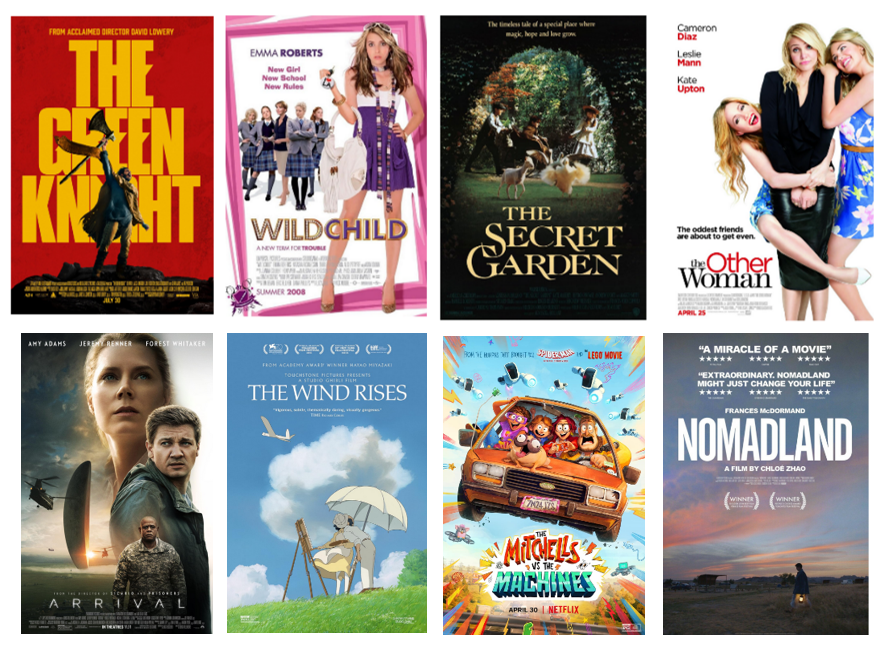
The Green Knight
There was a lot I liked about this film. I wasn’t enamoured by it but I enjoyed it. The cinematography, in my opinion, was beautiful. The score, actors, and set were a particular highlight for me, as well as the costume designs. The exploration of morality, what it is that makes someone a knight, and the grasp for power in Arthurian politics was a compelling watch and I would certainly watch this again to appreciate it a little more. This film has encouraged me to read the verse that it was based off of.
Wild Child (rewatch)
Critically, this is a weak film. In my heart, it is excellent. If you take it as it is – light-hearted and deeply unserious – then you can appreciate the film in its entirety. Natasha Richardson emulates motherly vibes; Georgia King excels as Harriet; and the general message of friendship and finding a place to belong is timeless for a pre-teen girl. Released in the 2000s, this is of its time. Overall, it ages well but there are some quips that don’t belong to this day and age. This isn’t a film to watch expecting excellence but if you want a good time, Wild Child always delivers.
The Secret Garden (1993)
The only issue I had with The Secret Garden was the lead actress – I found her to be rather unsettling. She is a child actress, so I understand her acting won’t be fantastic, but I struggled to fully immerse myself in the movie as a result. Aside from this, I actually liked this film a lot. The garden as both a literal and metaphorical place of healing and growth made for a wonderful story, as well as being visually stunning and emotionally gratifying. It encapsulated the grief and isolation of Mary after the death of her parents extremely well, in addition to the resiliency, curiosity, and natural compassion of children. There is a warmth to this film that you can only experience by watching it.
The Other Woman (rewatch)
Whilst rewatching, there’s a few things about this film that hasn’t aged well. There are elements of racial stereotypes, with a very 2000s mentality towards sex, relationships, and bodies. However, the concept itself is still a lovely one. The friendship that evolves between the three women is heartwarming – the way in which they uplift each other, recognise each other’s strengths, and manage to enact a perfect revenge plan is empowering, even now. Cameron Diaz was carrying that film on her shoulders. That’s why she’s so buff in this movie.
Arrival
I can struggle with sci-fi as a genre, due to the doomsday mentality and action sequences. It’s not entirely for me. Similar to The Martian, I came into this film with a hesitancy that was soon wiped clean. Arrival is a fantastic movie, exploring the importance of language and communication, diplomacy and connection in the face of uncertainty, the ways in which we allow ourselves to be bound by time, and the ways in which we choose love, no matter how temporary. This is a film that I’ll be pondering for a while. Arrival is masterfully crafted.
The Wind Rises (rewatch)
The life story of Jiro Horikoshi is certainly embellished but it doesn’t take away from the film itself, which is sweet, sombre, and inspiring in nature. The strong anti-war message, the respect for the dedication that goes into any craft, and the love of art is classic Miyazaki. The wind was a powerful metaphor for upheaval and moments of inspiration; I enjoyed its depiction as an unstoppable force of nature. Growing up in the U.K., there is a lot of history surrounding the World Wars but to see it from a Japanese perspective is always informative. The Wind Rises never fails to be a charming but emotive watch.
The Mitchells vs the Machines (rewatch)
I adore this film! It is such an underrated movie. The story is typical for the coming-of-age genre, as well as slightly predictable, yet it’s so heart-warming and earnest that you can forgive it. The Mitchells vs the Machines is also incredibly funny with a host of fantastic voice actors. With its mixture of computer animation, real-life photos, doodles, and painted backdrops, this is a piece of art in many ways. There aren’t many animated mediums that blend such an artistic variety in their work. This film being the same team as Into the Spiderverse and The Lego Movie makes sense. I would encourage anyone to watch it! It’s a fun and incredibly unique time.
Nomadland (rewatch)
After reading the book, I had to return to the film. This film was different in tone, highlighting instead the grief, isolation, and stress of living as a nomad. Although there were moments of connection and community, Nomadland doesn’t shy away from the loneliness, gruelling work, and sense of loss that the nomads carry with them. Despite this stark perspective, Nomadland echoes the sentiment of the book: that there is a sense of endless opportunity on the road. The closing scene, with its vast desert and winding road, is in harmony with Bruder’s conclusion. Despite its harsh moments, nomadic living offers something that can’t be captured elsewhere: a promise of freedom and wonder in living alongside the earth. Reading the book and then watching the film felt like a wonderful accompaniment to each other. I would highly suggest you engage with them, hand-in-hand.
Experiences
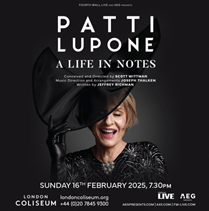
This month, I was extremely lucky to see Patti LuPone in concert. She was in London for her ‘A Life In Notes’ tour and I enjoyed it immensely. I nearly cried at least once seeing her perform live. This is my second time, as I was able to see her in Company (2019) with Jonathan Bailey and Mel Giedroyc. It still feels surreal that I saw her in Company (she looked directly at me by the way!!) but to have seen her again! Twice! I don’t think it will ever feel real. She didn’t perform any of my favourites, such as Time Stood Still, With One Look, or What’s the Use of Feeling (Blue)?. I didn’t expect her to for various reasons but I would have cried if she had. Even so, I loved seeing her vivaciousness on stage and getting to hear her perform some of her most famous and favourite pieces, such as I Dreamed A Dream, Don’t Cry For Me Argentina, and The Ladies Who Lunch. I’m very put out that she came back to an encore to yodel and that yodel is not in the album that accompanies the tour. Because, oh my gosh, can she yodel? Anyway, it was just so fun and wonderful and emotional. I had the best time with the best people.
My Favourites
My top three books this month are, in no particular order:
- Bisclavret.
- Black Tudors.
- Nomadland.
And my top three films are:
- The Green Knight.
- The Secret Garden (1993).
- Arrival.
As usual, my favourites excludes rewatches and rereads.
Next month, my reading challenge will include The History of Tom Jones, a Foundling by Henry Fielding and The Iliad by Homer. For films, it will be Dancer in the Dark. I’m really excited for all three! The reading and film challenges have been easier than I thought so far, in terms of finding time to complete them. However, the next two books are a bit thicker than the previous ones, so we’ll see how easy it is when the novel or text is longer. I don’t want to speak too soon! Either way, I’m excited and I can’t wait to see what March has in store!
 T.M. Hanson
Leave a comment